



AUTONOMOUS COGNITIVE ARCHITECTURES
A rigorous framework for self-governing AI systems, latent cognition, and neuromorphic decision architectures.
Moving beyond the prevailing model of AI as prediction followed by externally orchestrated action, this monograph examines how autonomous systems can integrate memory, representation, reasoning, and control within a coherent cognitive architecture.
It develops an architecture-first framework for systems that must interpret complex environments, operate under uncertainty, preserve internal continuity, and govern their own actions within explicit constraints.
Key Theoretical Contributions & Methodologies
01 / Cognitive Architecture
A unified architectural model connecting latent memory, internal representation, reasoning, and action selection as interdependent cognitive functions rather than isolated system components.
02 / Governed Autonomy
A framework for self-directed operation under uncertainty, combining adaptive decision-making with bounded authority, internal constraints, traceability, and mechanisms for human intervention.
03 / Architectural Synthesis
A systems-level bridge between artificial cognition, neuromorphic principles, and distributed autonomous architectures—designed to support analysis across multiple implementation domains
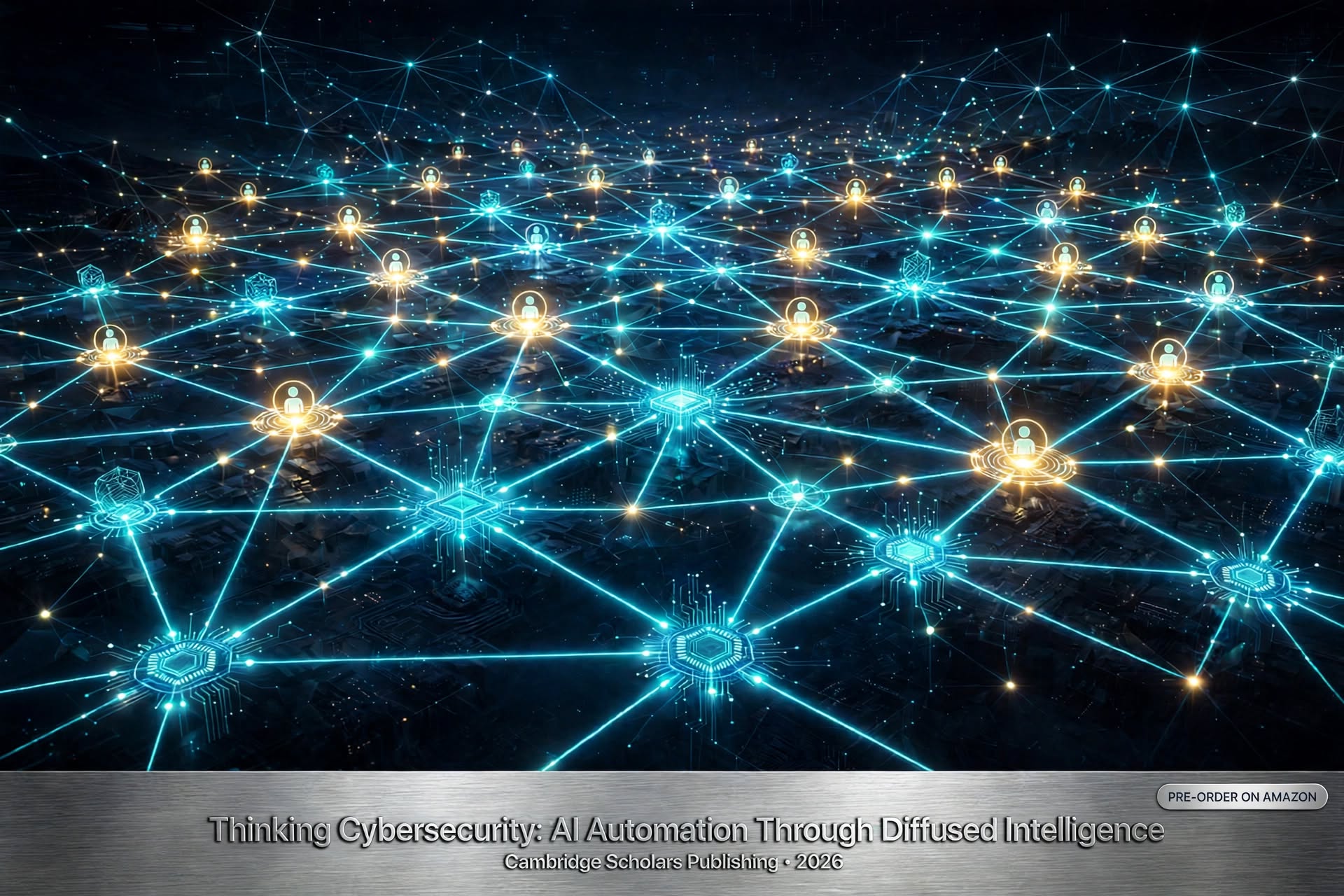
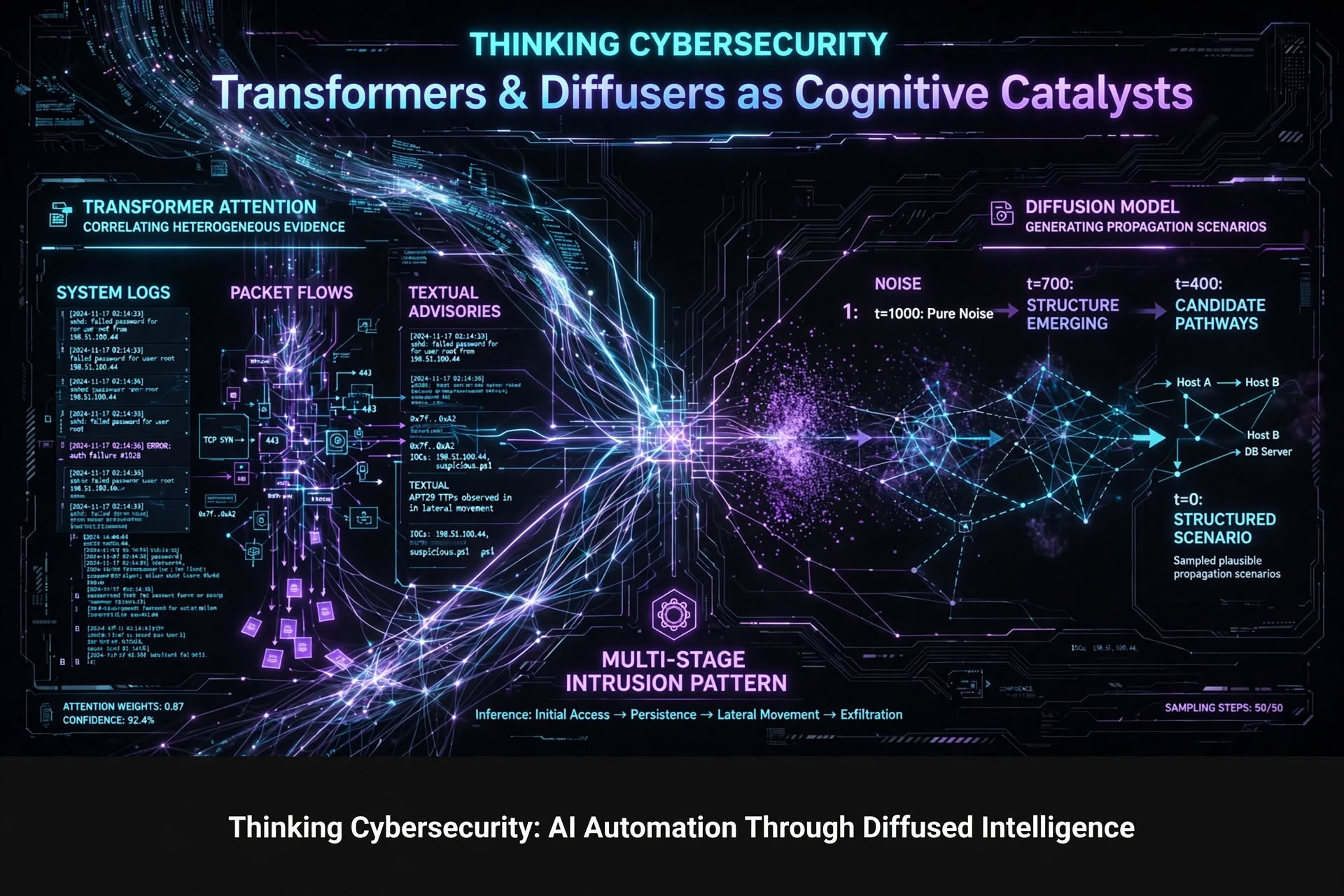
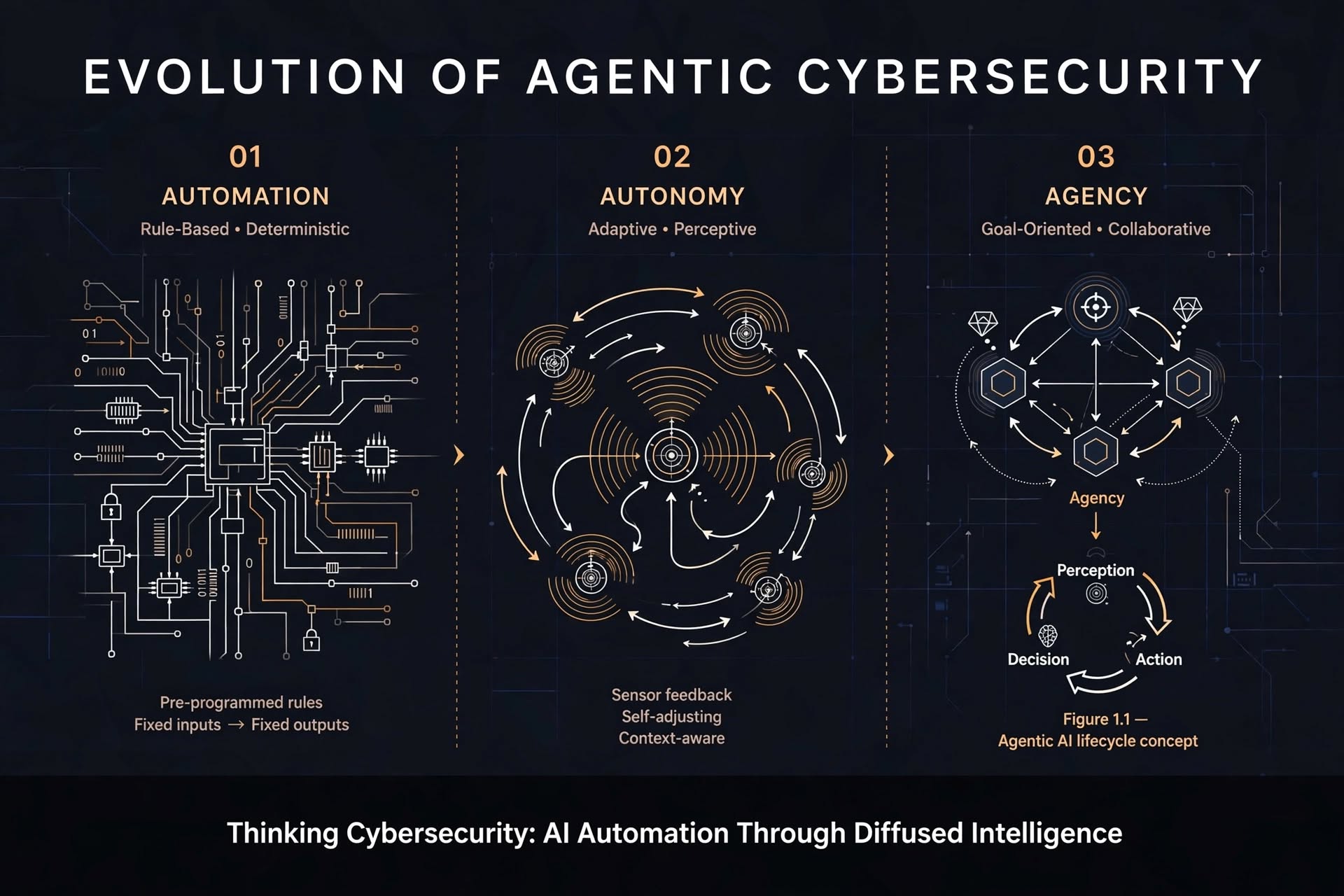

Monograph Outline & Core Syllabus
The monograph progresses from the conceptual limits of contemporary AI systems to the design of autonomous cognitive architectures. It examines how memory becomes an internal field, how symbols may emerge through structured learning, and how cognition can be coordinated with governance, control, and real-world action.
The resulting framework is not a claim that present-day AI has achieved human cognition. It is an architectural proposition for studying—and engineering—the functions required for increasingly autonomous artificial systems.
Core areas
- Foundations and boundaries of artificial cognition
- From predictive models to autonomous systems
- Memory fields and native retrieval
- Symbol formation and internal representation
- Uncertainty, reasoning, and decision control
- Neuromorphic and synthesized cognitive models
- Self-governance, constraints, and intervention
- Distributed and multi-agent architectures
- Evaluation, failure modes, and system stability
- Research directions toward cognitive completeness
A rigorous framework for self-governing AI systems, latent cognition, and computational decision architectures.
Available world wide for pre-order
Pre-order on Amazon
www.lehmanns.de
www.worldcat.org
UK Browns Books £67.99
Australia Readings A$416.99
Finland Adlibris €164.00
Special pre-order price
Denmark Academic Books 652.50 DKK
South Korea YES24 ₩182,610
USA ThriftBooks $135.42Amazon Hardcover Pre-orderLehmanns Media Gmbh
How to cite
Chicago (Notes-Bibliography)
Leocadio, Paulo. Thinking Cybersecurity: AI Automation Through Diffused Intelligence. Cambridge Scholars Publishing, 2026. ISBN 978-1-03648327-2.
MLA 9th
Leocadio, Paulo. Thinking Cybersecurity: AI Automation Through Diffused Intelligence. Cambridge Scholars Publishing, 2026. ISBN 978-1-03648327-2.
IEEE
P. Leocadio, Thinking Cybersecurity: AI Automation Through Diffused Intelligence. Newcastle upon Tyne, UK: Cambridge Scholars Publishing, 2026. ISBN 978-1-03648327-2.
Thinking Cybersecurity: AI Automation through Diffused Intelligence
By Paulo Leocadio
This book first published 2026
Cambridge Scholars Publishing
Lady Stephenson Library, Newcastle upon Tyne, NE6 2PA, UK
British Library Cataloguing in Publication Data
A catalogue record for this book is available from the British Library
Copyright © 2026 by Paulo Leocadio
All rights for this book reserved. No part of this book may be reproduced, stored in a retrieval system, or transmitted, in any form or by any means, electronic, mechanical, photocopying, recording or otherwise, without the prior permission of the copyright owner.
ISBN: 978-1-0364-8327-2
ISBN (Ebook): 978-1-0364-8328-9